Funding the Frontlines of Student Health: A Service-Learning Partnership with Pullman Regional Hospital's Athletic Training Program
By Rebecca L. Cooney, Professor of Strategic Communication, The Edward R. Murrow College of Communication, Washington State University

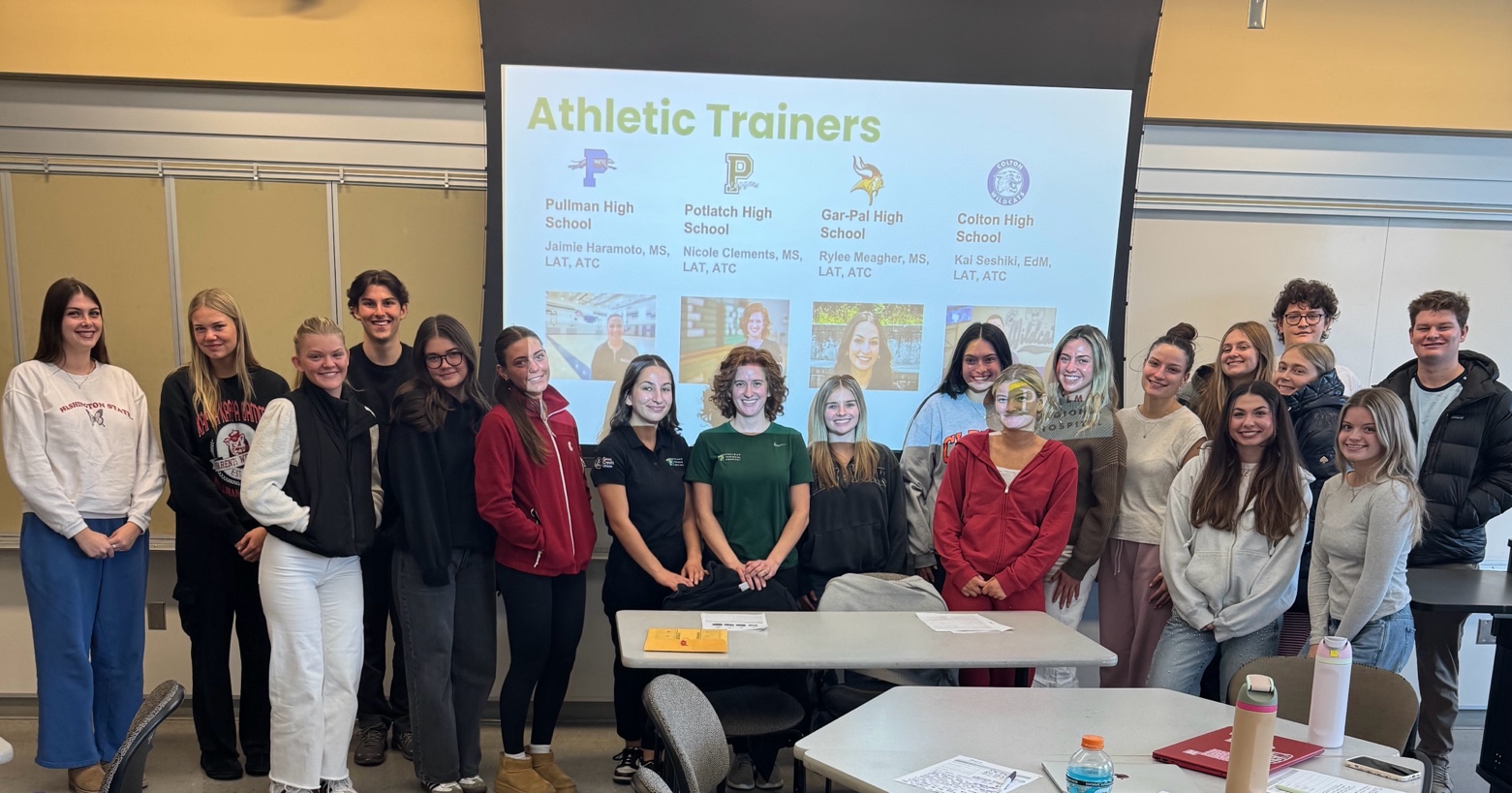 COMSTRAT 383 Media Strategies and Techniques for PR – visit with Athletic Trainers Fall 2026
Rural athletic training programs are critical for student health, injury prevention and career longevity, yet they frequently face two challenges: funding instability and low visibility in underserved communities. When my students were tasked with supporting these programs at high schools in the Palouse, Wash. region, they realized that addressing the need for fundraising goes together with raising community awareness. They developed campaigns that featured the trainer's key role in mental health support, concussion triage and holistic care for all student-athletes. Through this process, they discovered how strategic communication can impact an entire community.
The AEJMC Professional Freedom and Responsibility (PF&R) highlights five essential pillars: Free Expression, Ethics, Media Criticism, Diversity and Inclusion and Public Service. This post explores that fifth pillar - Public Service - and how it came to life in my COMSTRAT 383: Media Strategies and Techniques PR writing course in fall 2025.
By bridging the gap between a textbook and a real-world crisis, my students discovered that integrated marketing communications is one of the most powerful tools we have for health equity.
The Assignment: A Real-World Challenge
During the Fall 2025 semester, 25 PR majors enthusiastically worked on a service-learning partnership with Pullman Regional Hospital (PRH) and its Regional High School Athletic Training Program. Led by Stephanie Pierce, PRH’s Director of Development, the challenge was to bridge the funding and awareness gap for trainers in underserved rural regions including, Colton, Potlatch, Pullman and Garfield-Palouse.
I divided the class into six consulting teams, treating them like a real-world agency. They didn't just do homework; they invested an average of 23 hours each that included direct client consultation, strategy sessions and out-of-class content creation. Together they generated 60 unique deliverables.
Teams utilized a multi-channel approach, integrating digital tactics with traditional engagement tools. Specific outcomes included the creation of social media campaigns, infographics and targeted fundraising mechanisms like business pitches, recurring gift email appeals and event-based engagement tools such as branded merchandise and experiential tactics such as a sponsored coin-toss script customized for each program.
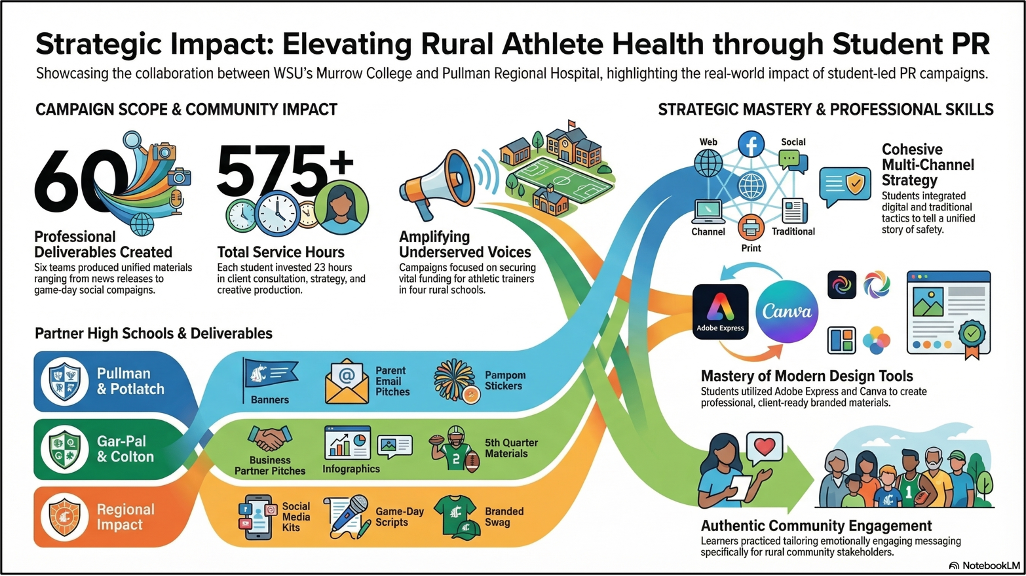
Infographic created using NotebookLM
Why We Work with Real Clients
Moving from basic writing to purpose-driven communication is a journey. They weren't just learning how to write; they were learning why specific messaging drives community action and philanthropic support. The pedagogical wins were everywhere:
- Tapping into human engagement: Students learned to blend hard facts with the kind of emotional messaging that turns a passive scroller into an active donor.
- Authentic representation: You can't use a big city template for a rural high school. Teams had to analyze their specific markets to ensure that the messaging and materials they created were customized for the community they represented.
- Technical skills: They built unified strategies across Canva and Adobe Creative Cloud Express, making sure the story of “safety and support” looked as professional as it sounded.
- Understanding the need: For many, this was a new applied experience. They saw firsthand how hard it is to keep these programs funded and the impact it has on an athlete's career longevity.
Impacts and Future Outlooks
Perhaps the most rewarding part of this project is that the 60 deliverables my students created aren't just sitting on the shelf. They are slated for implementation by PRH over the next year. Soon, these materials will be deployed across high school e-newsletters, social media channels, websites and live athletic events to foster ongoing community investment in student-athlete well-being.
As one student put it: "Working on a team to promote a donation-led program for small rural schools helped me see how strategic communication can directly support community well-being... it gave underserved communities a stronger voice.”
Ultimately, when we align classroom learning with community needs, we do more than prepare students for a paycheck. We prepare them to be public servants who add tremendous value to their communities.